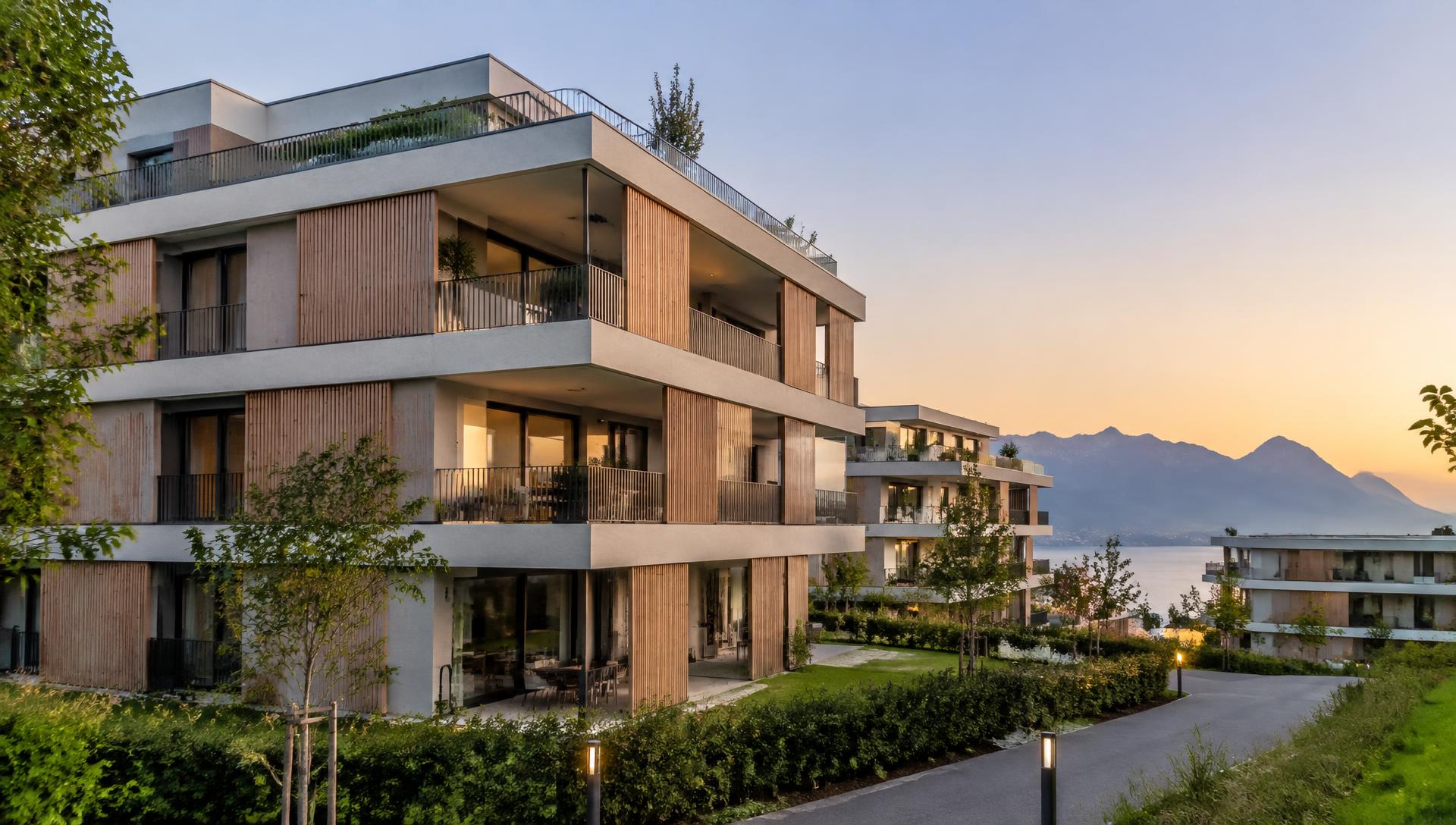
Marketing a new-build project is often reduced to a single decision: which portal, and from when? That explains why so many projects stay on the market longer than planned. A portal listing is a sales channel, not marketing – it creates visibility for people who are already actively searching, and nothing beyond that.
Successful projects treat marketing as a process of its own that runs for the entire duration of the project. This guide describes what that process looks like, which building blocks it needs and where most projects lose time and money.
The four phases of a marketing process
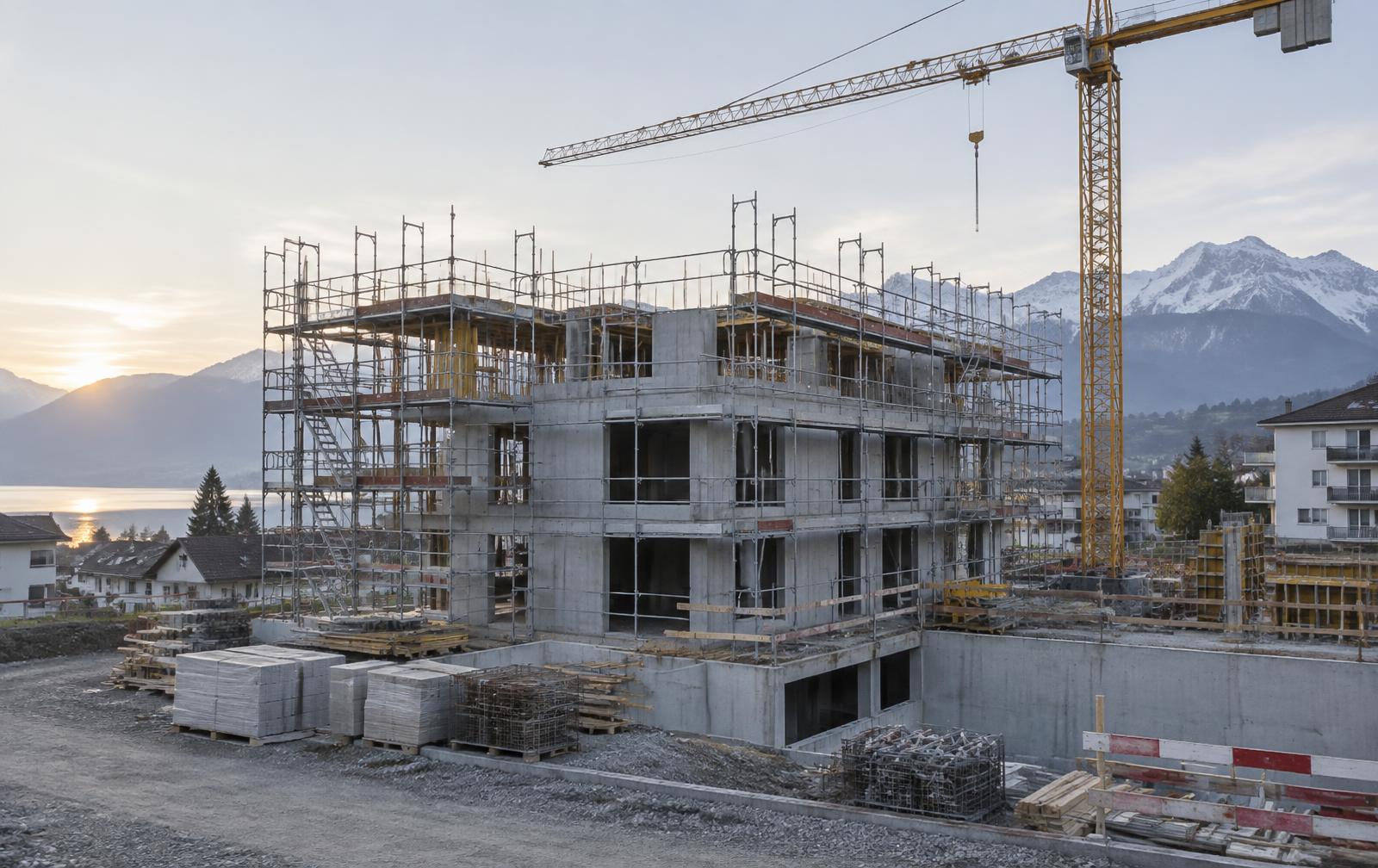
Phase 1: Pre-marketing
Begins as soon as location, unit mix and rough timings are set – usually right after the building application. The goal is not sales, but measuring demand and building a list.
If this phase brings 40 enquiries for 3.5-room apartments and three for the penthouse, that is usable information: it can still feed into the price list. After the official sales launch that room to manoeuvre is gone. Adjusting prices downwards sends a signal to the market that no developer wants to send.
Communicate the project status honestly. “Building application submitted, approval pending” is a perfectly normal statement. Presenting a project as secured while the objection period is still running does more harm later than good now.
Phase 2: Sales launch
The moment prices, floor plans and availability become public. The decisive point: the prospect list from phase 1 hears about it before the portal listing goes live.
That week of lead time is the entire economic point of pre-marketing. A project starting with 30 pre-qualified prospects behaves completely differently from one starting at zero. And speed in the first weeks is exactly what financiers and investors look at.
Phase 3: Main marketing
The longest phase. Here, being up to date decides credibility. Prospects check availability – and anyone who enquires for the third time about an apartment that sold long ago does not come back.
That is why the central requirement in this phase is not design but maintainability. If changing a status from “available” to “reserved” means an agency request and three days of waiting, it simply does not happen. The marketing then goes stale while the project is still running.
Phase 4: Selling the last units
The final units are almost always the hardest – often those with an awkward layout, a ground-floor position or an unusual size. Portal listings work poorly here because they create comparability, and comparability is not your friend with remaining units.
What helps: present the remaining units with an argument of their own instead of letting them run along in a list. A ground-floor apartment with a garden terrace is a different product from “the last 3.5-room apartment”.
The building blocks
A dedicated project address
The most important and most frequently skipped building block. A new-build project needs its own website on its own domain – not a subpage on the developer's website and not just a portal listing.
You keep the enquiry. Enquiries through portals are shared enquiries. Through your own page they come straight to you.
You are findable when people search for the project. Anyone who hears the project name – from neighbours, the local paper or the site board – googles it. Without your own page, that person finds portal listings of competing properties.
You control the presentation. Portals dictate structure, number of images and text length. A project with a strong location or architecture story cannot tell it there.
The unit overview
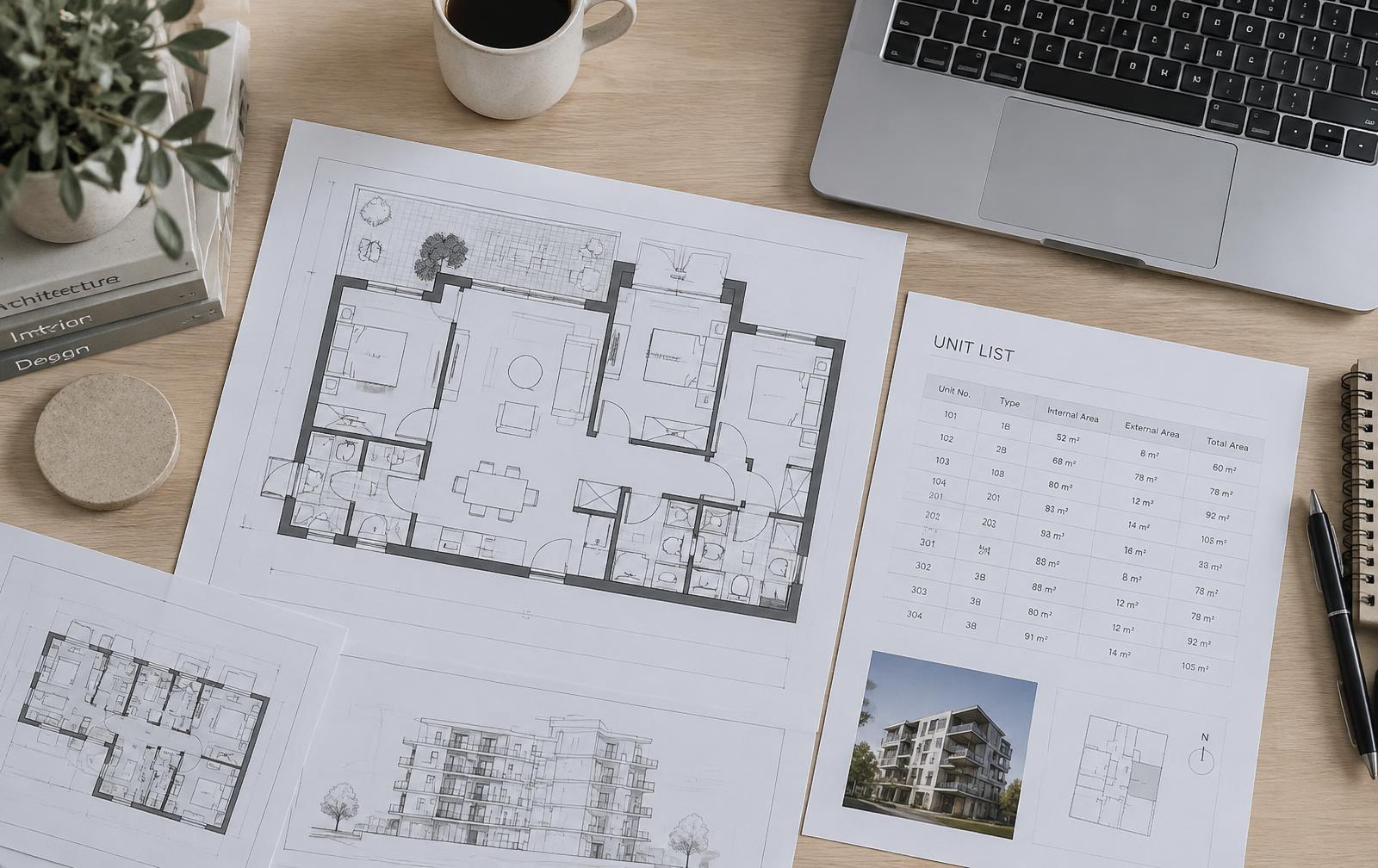
The centrepiece. Prospects want one question answered: is there something here for me? A complete overview with number, rooms, floor area, floor and status answers it in seconds.
The status per unit matters: available, reserved, sold. Keeping sold units visible feels counter-intuitive but works – a project where sales are visibly happening creates trust and urgency. An overview showing only the remaining units looks like a project that is not selling.
Location and surroundings
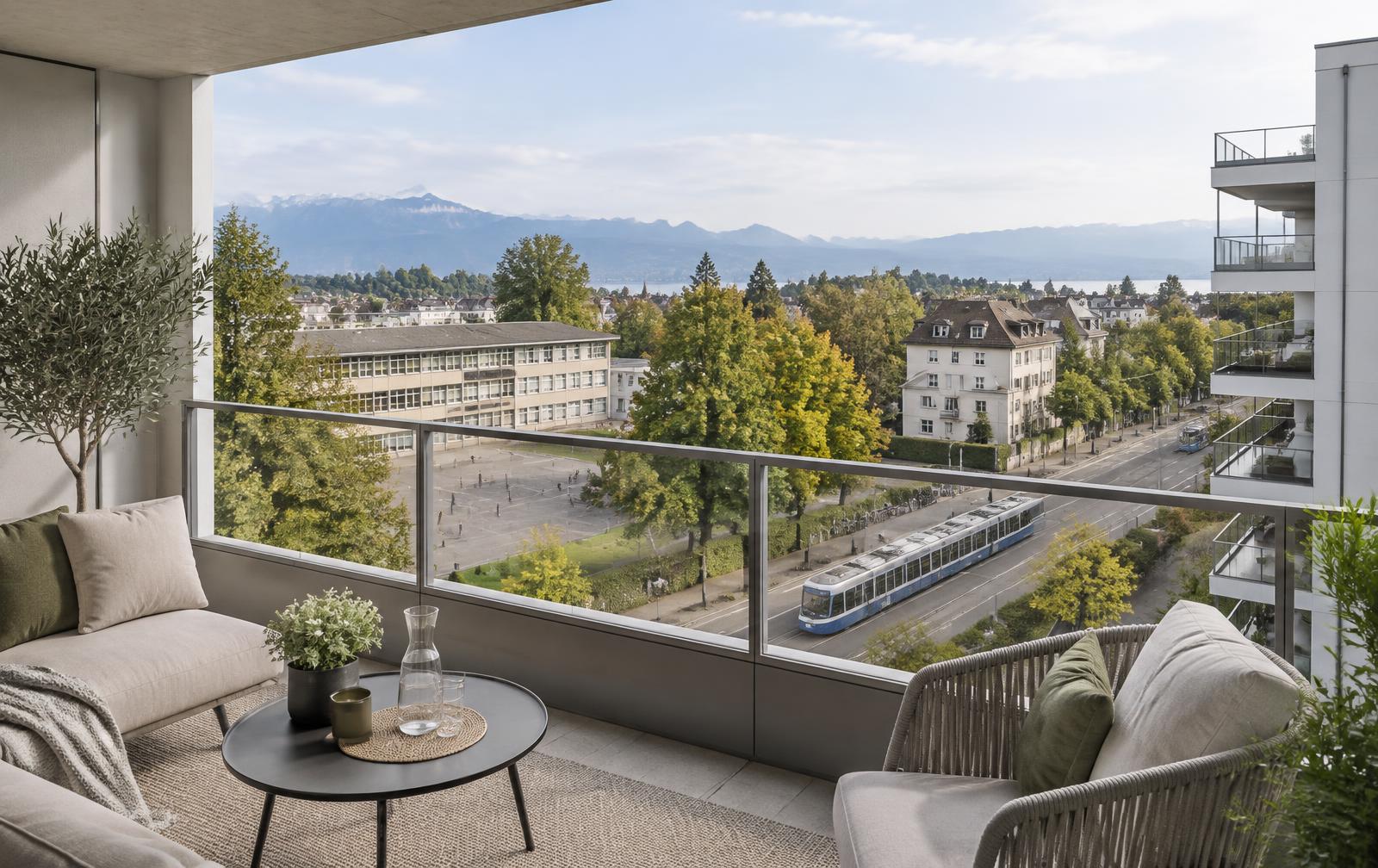
For new-build projects, location is the strongest argument because fit-out and materials are still abstract. An interactive map with schools, shopping, public transport and recreation does more than another visualisation.
The reason is simple: renderings show what every new-build project shows. The location is the only thing that cannot be duplicated.
Floor plans and documents
Floor plans per unit as downloads, plus construction description and brochure. Anyone downloading floor plans is far further along in the decision process than someone browsing images – a reliable buying signal.
A form that qualifies
A form asking only for name and email produces addresses. A form that also captures the unit of interest and the desired move-in date produces sorted prospects.
The difference shows on the first call: you know what you are talking about instead of having to ask.
Portals or your own website?
The question is posed wrongly. The two channels do different things: portals reach people who are actively searching but do not know your project. They are reach – and you should not do without it.
Your own project page reaches people who have heard about the project and provides the depth a portal format cannot. It is also the destination every other measure points to: site board, flyer, advertisement, social ads, mailing.
The workable split: portal for reach, your own page as headquarters. Point from the portal listing to the project page, and keep the full information and the enquiry form there.
The four most common mistakes
Starting too late. Between the building application and finished agency material there are often months in which nothing happens on the marketing side – even though people are already talking about the project.
Waiting for completeness. A project page does not have to be finished to work. Staged publishing – first location and unit types, later visualisations, then floor plans and prices – beats the full version because it collects leads earlier.
Managing enquiries in an email inbox. Enquiries answered once and then forgotten are lost leads. Someone who got in touch eight months ago and never heard back has bought elsewhere by now.
Not updating availability. The mistake with the biggest impact, because it destroys trust. And it is almost always a process problem, not a diligence problem: updating is simply too much effort.
Show prices or not?
A frequently debated question. Experience speaks clearly for transparency, with one exception.
Showing prices filters. Anyone who does not enquire after seeing the price would not have done so after the first call either – you save those conversations. Conversely, “price on request” costs you enquiries from people who would fit but do not clear the hurdle.
The exception: reserved units and the pre-marketing phase, when prices genuinely are not fixed yet. There, “on request” is correct – as long as it reads as a deliberate statement and not like a gap.
Effort as the real obstacle
Most developers know all of this. What prevents implementation is not insight, but effort.
A custom-built project website usually means several weeks of lead time, a four-figure budget and an agency request for every change. For a project with 24 units whose availability keeps changing over two years, that does not add up – and in practice it means the site is not kept up to date.
That is why the decisive property of a project website is not its design but who can change it. If a status change takes seconds and is done in-house, the marketing stays current for the whole duration. If it requires an external request, it does not.
That is exactly what VisionProjects is built for: a project website with a unit overview, availability, floor plans, a map and lead capture that you create yourself and keep current yourself – across all four phases.
Read more about the software on the project website software page, and the conditions on the pricing page.